
Dramaturgical Resources
2026
THOUGHT/CRIME
By Charlotte Brathwaite & Ismail Khalidi (inspired by "1984" by George Orwell)
Over the course of the season, our assistant directors and student dramaturgs will be compiling dramaturgical resources relating to each production as it develops. Below are some links to websites which relate to the history of the play, the biography of the playwright, and sites that contextualize and, we hope, shed light on the directorial approach to the dramatic material.
We hope you find these resources of interest.
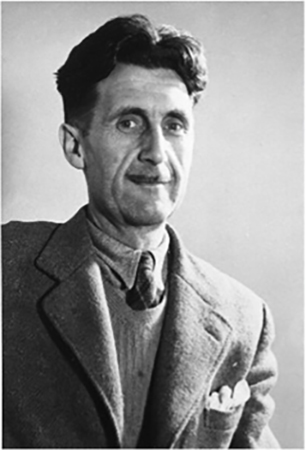 | 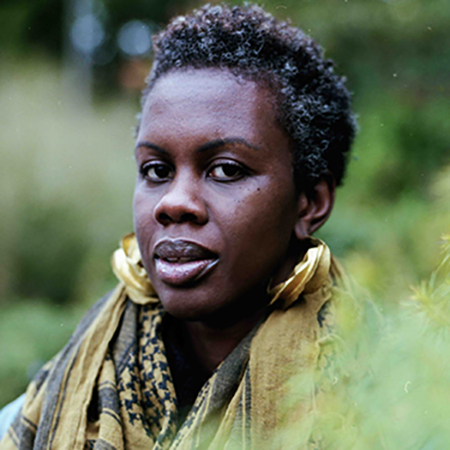 |  |
George Orwell June 25, 1903 - January 21, 1950 | Charlotte Brathwaite | Ismail Khalidi |
In his reflections on George Orwell, and the modern propheticism of his works, in the documentary 2+2=5, director Raoul Peck poses the question: why George Orwell? Why now?
The question remains an influential one.
The British journalist and author of two vastly influential novels of the twentieth-century, George Orwell waded through a complicated relationship with authority and imperialism in his youth, that shaped his writings as an adult. Orwell, born Eric Arthur Blair, grew up in Eastern India, his father an officer in the Indian Civil Service. After education in England, Orwell traveled to (what was then) the British Colony of Burma to serve as a police offer—and it is here that Orwell first doubted his role in a larger colonial system. In Shooting an Elephant, an essay Orwell wrote in 1936, in the midst of the Indian Nationalist movement, he not only expresses the turmoil of being a British officer in Burma, but also expresses support for the Burmese against “their oppressors, the British.” Though this is the beginning of his burgeoning anti-imperialist sentiments, Orwell includes a few racist epithets and doesn’t shy away from his cruel treatment of some Burmese men, highlighting the complicated, imperfect nature of his early progressive opinions. This is epitomized in his descriptions of shooting an elephant that had killed a Burmese man, who Orwell disregards as an unskilled laborer. It exposes a disparity between Orwell’s personal beliefs and instincts, and his duty in upholding the British empire.
This concept of anti-imperialism and self-turmoil was reflected in many of Orwell’s other works, and was joined by Orwell’s staunch anti-Stalinist stance after his experiences in the Spanish Civil War. This is reflected satirically in Orwell’s famous political fable, Animal Farm. This novel popularized Orwell’s use of fictional dystopias to unweave power structures, and further develop his attitudes towards social change.Only months before his death, George Orwell published his second dystopian novel— and perhaps his most politically relevant work—1984. His experiences with British imperialism, war, and eventually his work platforming the issues he cared about with the BBC, all shaped and led to Orwell’s inclination towards democratic socialism. This, in turn, fostered Orwell’s scathing critique of capitalism, surveillance, and doublespeak, and created an overall tone of anti-authoritarianism in 1984. But not without aim—1984 was infused with Orwell’s “desire to push the world in a certain direction.”
It is this desire for change that has found residency Charlotte Brathwaite’s Thought/Crime. This play continues asking these apt questions of why now?, and tacks on a few more to delve into on the stage. What Orwellian themes resonate vividly with our modern sociopolitical climate? How have they been exacerbated, but cleverly hidden, in the technological age? What more must we go through before we say “No!” and reinvest in the truths and relationships that both fulfill us, and inherently disrupt this system?
Brathwaite and her creative collaborator Ismail Khalidi engage Thought/Crime, first and foremost, through sustained contact with George Orwell’s 1984. Drawing on direct excerpts, reimagined scenes, and multi-modal explorations of Orwell’s world, the play examines enduring questions of surveillance, conformity, complicity, and resistance. At the same time, Thought/Crime situates Orwell’s vision within a wider contemporary framework, weaving together political theory, cultural memory, and modern sociopolitical realities to ask why these questions feel so urgent now.
Thus, Thought/Crime becomes a tapestry of global voices, emerging from an impulse to anticipate and call to a breadth of lived experiences.
Thought/Crime makes reference to the words of politician, economist, and author Yanis Varoufakis, who hones in on the concept of technofeudalism, and the failures of capitalism in the modern age. Thought/Crime also grapples with the works of Aldous Huxley, one of Orwell’s contemporaries, an outspoken critic of materialism and conformity.
Additionally, Thought/Crime is influenced by the works of Booker Prize winner Arundhati Roy, who has made an impact through both her fiction writing, and her political activism. Octavia Butler is another influential voice for Thought/Crime, as her widely-celebrated science-fiction, similar to Orwell’s, has remained prophetic for our modern society through her exploration of power structures, the climate crisis, and political change.
Both in technical elements and actual dialogue, Thought/Crime also references powerful cultural moments such as the Occupy Wall Street movement, a large-scale anti-capitalist protest in 2011, and the 2013 whistleblower Edward Snowden, who exposed NSA global surveillance programs. Ghanaian journalist Anas Aremeyaw Anas, and his masked journalism, also contextualizes Thought/Crime by being an example of what it means to be a truth-bringer.
When 1984, written (albeit, prophetically) in 1949, meets the modern realities of life after the true year of 1984, Orwell’s, and our, questions become so much richer. In over seventy-five years, how much has changed? What has gotten worse? And what do we, as a community, need to do to make change?
Thought/Crime thoughtfully supports notions of connection, community, and the intimacy of love. It champions freedom, reclamation and recognition of truth, and saying an adamant “No!” to blind conformity. This production’s immersive set-up allows audiences to experience these things, wholly, and with others at their side. And ultimately, Thought/Crime encourages us to grasp the critiques within 1984, and each other, in a way that allows us to take a step forward into the modernity we want.