

Floria Mora-Kepfer Uy
she/her/hers
Assistant Professor
Levinson-Shapiro Faculty Scholar
PhD
Research Active
Now accepting:
PhD students
Please email with inquiries.
Undergraduate researchers
Please email with inquiries.
- Office Location
- 332 Hutchison
- Telephone
- (585) 275-3305
- Web Address
- Website
Office Hours: By appointment
Research Overview
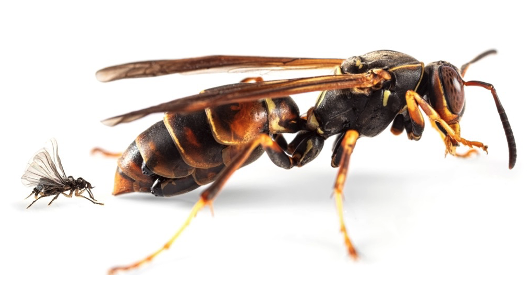
Exploitation of social hosts by parasitic insects
Host and parasite species are in a coevolutionary arms race in which parasites exploit the host for their own fitness benefits, while the host evolves defense mechanisms. While behavioral host manipulation by parasites have been widely studied, less is known about the actual mechanisms underlying parasitic manipulation. To this end, we focus on understanding how parasites exploit phenotypic plasticity to reprogram their hosts' neurogenomic architecture, physiology and lifespan. As these parasites can extend their host's lifespan at the cost to other life history traits, our goal is to establish social wasps as an emerging model system to study the trade-off between healthspan and lifespan.
PAST PROJECTS
Evolution and plasticity of sensory systems
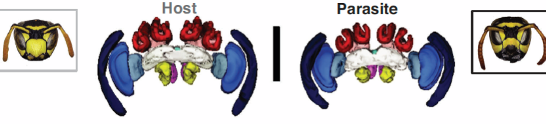
How do social animals process information from their physical and social environment to make decisions that enhance their survival and reproductive success? In animal societies where group members are constantly interacting, how do these interactions shape brain architecture and function? To answer these questions, we explore the impact of the social environment in both neurogenomic and physiological responses. In particular, we explore plasticity of sensory systems in Polistes wasps that form flexible dominance hierarchies. We also study how an arms race with closely-related social parasites influences investment of sensory brain regions.
Adaptive responses in Social Insects
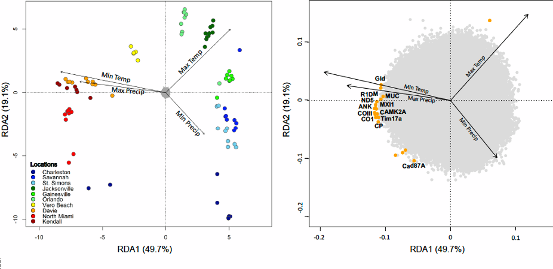
The benefits of cooperation are essential in driving group formation. However, an individual can gain significant fitness benefits by acting selfishly at a substantial cost to others in the group. We use the wasp Mischocyttarus mexicanus to understand the effects of the physical and social environment on individual decisions of group formation and subsequent behavioral and reproductive tactics by colony members. We are also identifying how genomic, physiological and behavioral adaptations can facilitate local adaptation to distinct climatic pressures.
Nestmate Recognition and Helping Behavior in Tropical Weaver Ants
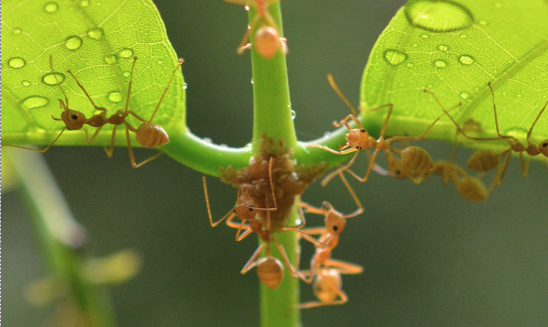
We explore kin and nestmate recognition and their effects on behavioral outcomes in the weaver ant Smaradigna oecophylla. We are currently working in several insular populations of located in the Solomon Islands. Based on these recognitions signals, the ants can remarkable choose to help others in distress or instead attack them.
*Undergraduate co-author **Graduate co-author
Research Interests
- Evolution of sociality
- Phenotypic plasticity
- Neuroethology
- Host-parasite coevolution
- Mechanisms underlying parasitic manipulation
Selected Publications
- Vacca, N.A., V. Padilla-Choy., J.M. Ferro & F.M.K. Uy. 2026. Transcriptomic analyses reveal how parasites exploit plasticity in caste and brain development of social wasps. BMC Biology. Early Access.
- Carvalho da Silva, R., F. Cappa, F.M.K. Uy & D. Baracchi. 2025. Compromised minds: cognitive decline in a social insect correlates with parasitism status. Journal of Experimental Biology, 228(18), jeb250887.
- Castaño, M. I.**, X. Ye and F. M. K. Uy. 2024. First genome assembly of the order Strepsiptera using PacBio HiFi reads reveals a miniature genome. Scientific Data 11, 934.
- Jernigan, C.M., & F.M.K. Uy (2023). Impact of the social environment in insect sensory systems. Current Opinion in Insect Science. 59, 101083.
- Gandia, K.M**., Cappa, F., Baracchi, D., Hauber, M., Beani, L., & F.M.K. Uy (2022). Caste, sex, and parasitism influence brain plasticity in a social wasp. Frontiers in Ecology and Evolution, 10, 803437.
- Rozanski, A.N.*, Cini, A., Lopreto, T.E*., Gandia, K.M**., Hauber, M.E., Cervo, R., & F.M.K. Uy (2022). Differential investment in visual and olfactory brain regions is linked to the sensory needs of a wasp social parasite and its host. Journal of Comparative Neurology, 530(4), 756-767.
- Uy, F.M.K, Jernigan, C.M., Zaba*, N.C., Mehrotra*, E., Miller, S.E., & Sheehan, M.J. (2021). Dynamic neurogenomic responses to social interactions and dominance outcomes in female paper wasps. PLoS Genetics, 17(9), e1009474.
- Uy, F.M.K., Adcock, J. D.,* Jeffries*, S. F., & Pepere, E. (2019). Intercolony distance predicts the decision to rescue or attack conspecifics in weaver ants. Insectes Sociaux, 66, 185-192.
- Mora-Kepfer, F. (2014). Context-dependent acceptance of non-nestmates in a primitively eusocial insect. Behavioral Ecology and Sociobiology, 68, 363-371.